Doug McNamee Doubles Down on Baylor’s 'Fan-First' Vision at Big 12 Media Days
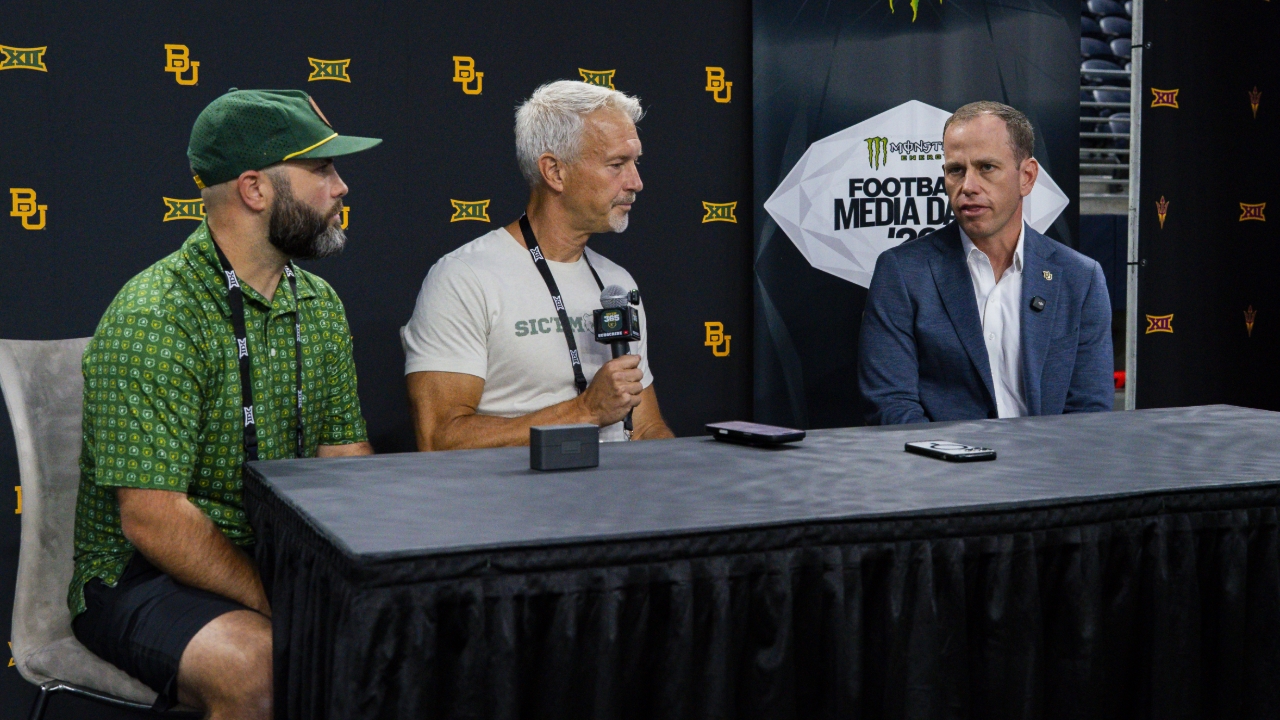
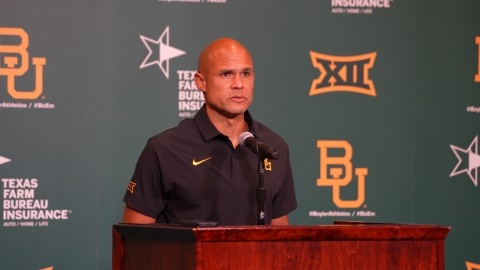
FRISCO, Texas – In Doug McNamee’s first appearance at Big 12 Media Days as Baylor’s athletic director, much of the conversation centered on his recent USA Today op-ed, where he argued that fans have become an afterthought amid college sports’ rapid transformation over the last five-plus years.
“With all the things going on in college athletics, there’s a lot of talk about every demographic except for the fans,” McNamee said in a sit-down interview with SicEm365’s Colt Barber and Ashley Hodge on Tuesday. “I just want to be different and say, ‘No. This is a priority: let’s not forget where this all starts.’ Let’s make sure that our actions match our rhetoric.”
One of the first things McNamee did when he took over as Baylor’s athletic director was to pen an open letter, publicly stating that the “Fan-First Era” was underway in Waco. He best defines it as an intentional and deliberate strategy that starts from within and prioritizes, you guessed it, the fans.
“Our consumers are the heroes, and we’re the guides,” McNamee said. “We’re the guides that hopefully create that moment and that experience for them, but it’s their story, and we’re just part of it. Repositioning Baylor Athletics as just a guide to experience memories and moments is really what motivates me. At the end of the day, it’s the thing that I care the absolute most about, because it provides the opportunities and experiences to have great student athletes, and to then promote the university.”
Don’t let those words for a second make you think that McNamee doesn’t prioritize winning, as he went on to note, “The winning piece is so important. I always want to couple it. This is about winning. I don’t want to dismiss it and say, ‘Hey, we’re trying to enable and create a culture where losing is accepted.’ Winning is vital.”
McNamee continued, “When you create a hospitable environment, it’s like [the saying], ‘Luck is when opportunity meets preparation.’ Preparing and ensuring that we’ve got the aspects of a great fan experience in place to hopefully capture that special, unforgettable moment. We’ve positioned the fan to be able to embrace it and enjoy it, and if we do that, it will change us.”
One way McNamee is looking to expand Baylor’s footprint is through the recently introduced Waco Rush Pass, which allows members of the Waco community to purchase discounted tickets to most Baylor sporting events. McNamee believes the Waco community hasn’t been prioritized as much as it should, and that this is a long-term investment in potentially growing Baylor’s fanbase throughout Central Texas.
“There are guys and gals that, when they show their fandom, have a special place in my heart for them, and I think this is a numbers game moving forward in college athletics,” McNamee said of Waco locals who didn’t attend Baylor. “As a smaller private school, we’re at a disadvantage. We’ve got to change that dynamic, and that means bringing more people into the tent, and the best way to do that is to connect with the local folks.”
While the fan-first approach comes naturally to McNamee, he discussed one of the more challenging aspects of his job and admitted that the transfer portal’s volatility has been far more chaotic than he ever expected. He noted that coaches never entered the profession expecting to navigate the daily challenges of NIL and the transfer portal, but they’ve had no choice but to adapt to the rapidly changing landscape.
“Scott Drew is a great example,” McNamee said. “That guy built a National Championship program by developing guys: taking three-stars, redshirting them and developing them over four to five years and winning National Championships. That cannot happen anymore. It does not work anymore. It literally does not work anymore. The guy has to go out and reinvent himself, which he is, and he will. But that part has just been jarring, for sure, to see.”
In today’s college athletics landscape, universities are being forced to think creatively to stay ahead. One way Baylor is positioning itself for the future is by building a centralized NIL front office to serve the entire athletic department, rather than managing NIL efforts on a sport-by-sport basis.
“I would say the front office administration of NIL and best practices in terms of the way that we position talent evaluation and ultimately the way that we negotiate these contracts to the benefit of the university,” McNamee said. “That part has been a complete transformation that didn’t exist before. We’re trying to build out a robust team that can be supportive across all of our sports, and that’s a unique thing we’ve got.”
With almost every athletic department scrambling to stay afloat, the question remains: Will stability ever return to college athletics? One potential answer is the proposed “Save College Sports Act,” a congressional bill that aims to “end the chaos by bringing stability to transfers, eligibility, recruiting, tampering, and real NIL rights for athletes.”
McNamee is optimistic but unsure if it’ll ever happen, saying, “It just changes by the day. We’ve got this congressional bill, which could completely transform college athletics as we know it. Some days, it looks like it’s going to move forward; some days, it’s not. The impact on what we do on a daily basis will be significant based on that bill.”
Although it’s been a whirlwind, McNamee’s been on the job for almost half a year now. He believes that some of the best advice he gets is from an outside perspective because it’s such a “disruptive moment” in the industry, but he has also leaned on some fellow Big 12 athletic directors.
“I respect and have a lot of connection with Fernando Lovo at Colorado because he’s brand new and got started; he’s had a recent journey into the Big 12 as well,” McNamee said. “Brian Santiago is a great resource at BYU. A legacy guy that stayed home and worked his way up through college athletics and deals with some of the similar dynamics that we do at Baylor, but it’s a room full of a lot of smart people.”
Since McNamee’s been on the job for such a relatively short period of time, he doesn’t believe it’s appropriate to immediately walk in the door and start begging for money, especially considering “the roller coaster our fan base has been through over the last 10 to 20 years, I promise you, it’s not comparable to anyone else.”
Instead, under his leadership, he believes Baylor needs to acknowledge its missteps and shortcomings first, saying, “Certainly, fan experiences are at my core, and I’m super passionate about them, but we all have to understand that this is all fueled by revenue. I personally believe the fan experience piece is the first building block, because you’ve got to earn that trust and that belief before you ask for the money, and you’ve got to get those people in the top of the funnel and say, ‘Man, this is fun, I want to do it, I want to be a part of it, and then I want to give to it.’ I think a lot of people get mixed up on the steps.”
The first-year athletic director believes Baylor has the resources and the people in place to elevate its athletics programs, pointing to recent investments such as Foster Pavilion and the Fudge Football Development Center. Moving forward, however, one of McNamee’s priorities is ensuring everyone is rowing in the same direction, a goal he believes begins with earning the trust of both large and small donors.
He closed the interview with a call-to-action, saying, “[Telling people], ‘I’m here. We’re not going anywhere. We’re gonna work hard to earn your trust.’ Yes, the ask is coming, and we’ve got to be willing to ask for the money at some point, but we want to earn trust and show people that we’re committed. We’ve got a long-term plan and future for Baylor Athletics, and then at that point I think we’ll be in a really good position.”