
The Pollyanna Vloggers on YouTube want his head on a pike after yesterday.
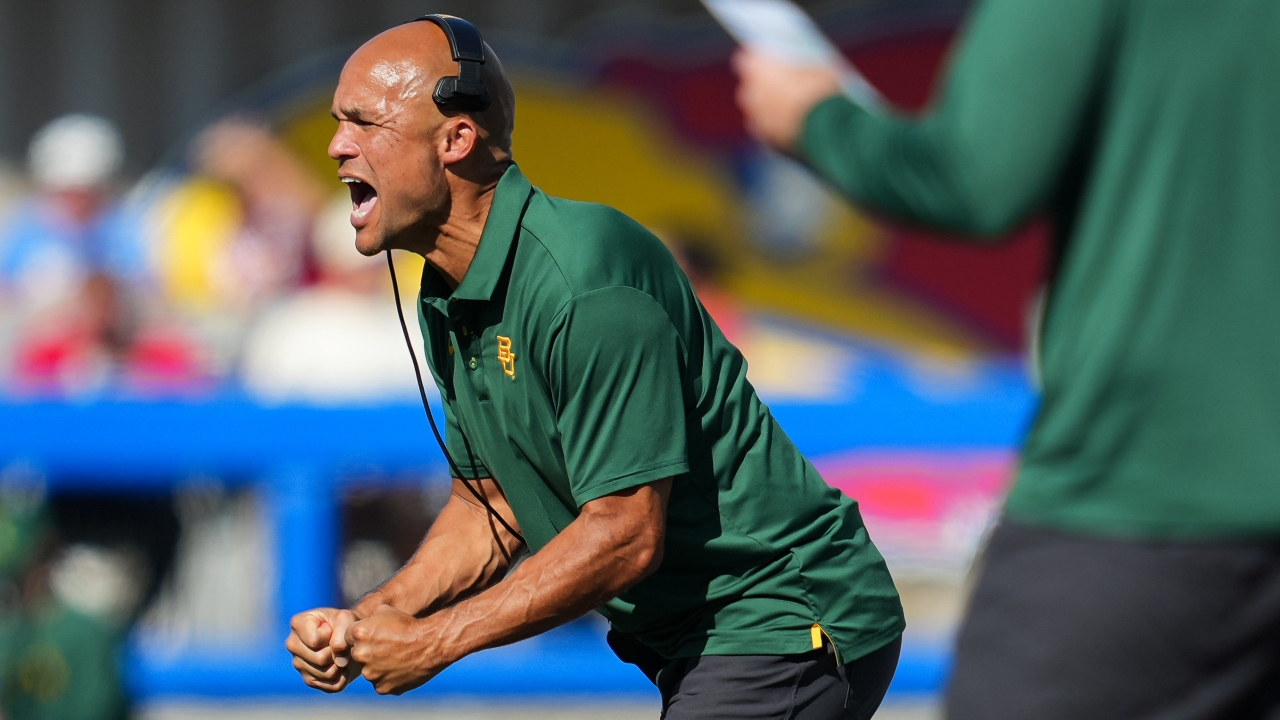
Photo by Jay Biggerstaff-Imagn Images
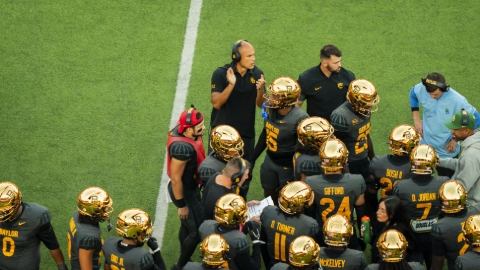
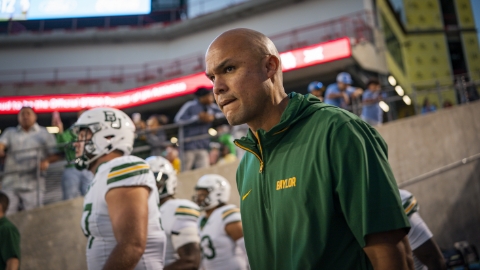
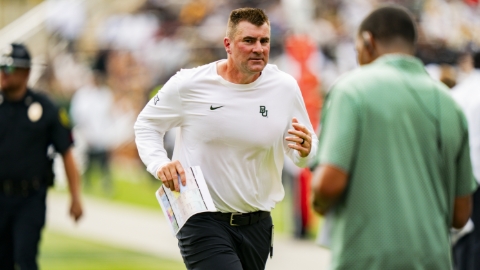
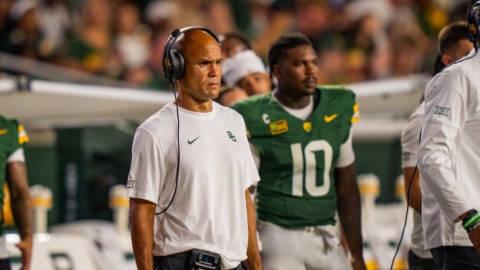
LAWRENCE, Kan. – In recent years, whenever Baylor football head coach Dave Aranda seemed down to his final strike, the Bears often bounced back with a beatdown.
Examples include Baylor’s 59-35 road win over Texas Tech in 2024, which sparked a six-game winning streak to close the regular season after a 2-4 start. Despite entering last year with high expectations, the Bears limped to a 4-4 start and appeared poised to part ways with Aranda before Baylor blew out UCF, 30-3. The fiasco surrounding athletic director Mack Rhoades IV and his eventual departure unfolded shortly thereafter.
This season, the Bears put together a rather uninspiring win over Colorado to open Big 12 play that set off alarm bells, only to bludgeon Arizona State on the road, 55-19, giving everyone hope that something had clicked.
It's been a never-ending roller-coaster, to say the least.
So, naturally, when the Bears laid a major egg against rival TCU in front of a nearly packed McLane Stadium last Saturday, falling 17-6, it seemed likely Baylor would head to Lawrence and beat the Jayhawks, leaving the Bears spinning their wheels. The fan base would remain frustrated as ever, but Baylor would technically remain alive in the Big 12 standings.
Instead, the Bears (4-3, 2-2) found another way to lose, as a potential game-winning field goal was blocked in the final minute, sealing a 25-24 defeat to Kansas. It marked Baylor’s first defeat to the Jayhawks since Oct. 13, 2007 and ended a 14-game winning streak over Kansas.
More importantly, though, this felt like the end of the rocky ride that’s been Aranda’s tenure. While the timing is yet to be determined, it’s hard to imagine retaining the seventh-year head coach, whose career record is 40-40, beyond this season after back-to-back losses to TCU and Kansas. Neither the Horned Frogs (3-4, 1-3) nor the Jayhawks (3-4, 1-3) had beaten a Power Four opponent before beating Baylor on back-to-back Saturdays.
Throughout the fall, Aranda has praised his team's focus and connectivity, but against Kansas, many of the same issues that have plagued Baylor throughout recent seasons reared their ugly heads once again. The Bears had penalty problems (12-for-116), struggled to run the ball (35 attempts for 122 yards) and couldn’t execute offensively on third down (5-of-15) or keep Kansas off the field on fourth downs (5-of-8).
His postgame press conference started eerily similar to past ones, as Aranda opened it, saying, “It’s gutted in the locker room. I’m proud of the effort and fight. The execution’s got to be a whole lot better. When it comes down to the plays that matter most, we’ve gotta execute them better.”
To Aranda's credit, his team kept fighting for him on Saturday, especially on defense, but the Bears were eventually worn down, with Kansas dominating time of possession, 36:41 to 23:19.
After holding the Jayhawks to 10 points in the first three quarters, the dam finally broke against one of the Big 12’s most explosive offenses. Kansas scored on three of its four fourth-quarter drives, including the go-ahead eight-yard rushing touchdown from quarterback Isaiah Marshall, who finished with three scores and two turnovers.
“I think as the game went on, we got worn out and we got tired,” Aranda said of Baylor’s defensive performance. “I think the guys were fighting. They are a team of gadgets and a collection of the hardest plays to defend. That's their deal, and so it's very much a taxing offense.”
Aranda later added, “They were going for it on fourth down and achieving. There's just taxing drives as well, and I think the offense was struggling to score and just the focus of, ‘Hey, every possession on defense is a life-or-death thing.’ I think that also taxed them.”
The Bears gave up a season-high 209 rushing yards on 56 carries, which was uncharacteristic. Kansas running back Dylan Edwards had 30 attempts for 156 yards. Before Saturday, the Bears had limited each of their three conference foes to under 100 yards on the ground.
“To be honest, we expect to come out dominant, physical and stop the run,” junior linebacker Kyland Reed (eight tackles, one sack) said after the loss. “That's something we value. So anything besides that, we got to get back to the drawing board, get it done, get it fixed.”
Offensively, Baylor’s struggles continued in the run game despite a change at left guard, with eighth-year senior Cooper Lovelace replacing junior Nate Kibble, and at right tackle, with senior Cole Rhett replacing senior Logan Moore. The Bears’ running backs combined for 83 yards on 24 carries, averaging 3.46 yards per attempt.
A welcome sign, however, was junior quarterback DJ Lagway's willingness to use his legs after just a few carries in the loss to rival TCU. Although it wasn’t enough to turn the tide, the Baylor legacy kept the chains moving more consistently against Kansas than previous weeks and tied a career high with 11 attempts for 66 yards, including a 20-yard carry.
“I’m just feeling better,” Lagway said afterward. “Coming off the injury I came off of, it's been a long process, but with the training staff and medical team, we’re finding a good solution to help me continue to feel better each week. I wasn't all the way there today. I'm getting better each and every day, but just trying to find a solution to help me feel great on game day.”
Through the air, however, Lagway didn’t get much help from his pass-catchers, outside of Gavin Freeman (nine receptions, 123 yards) and Jayden McGowan (four receptions, 31 yards, touchdown). The junior signal-caller finished with 236 yards, a touchdown and an interception on 20-of-31 passing. Beyond the handful of drops, Lagway also wasn’t on the same page with some of his wideouts a couple of times.
“We just gotta have a better effort,” Lagway said. “At the end of the day, people are gonna make mistakes. You're not gonna run the right route. You're gonna drop passes. I'm gonna miss throws. But it's all about the effort. I feel like these last couple of weeks, there have been times when we showed a lot of effort, but there have been times when we haven't. Just being more consistent in that area would be great for all of us.”
One of those untimely misses came in the first quarter when the Bears were driving on their first possession and on fourth and short deep in Kansas’ territory, Lagway ignored a favorable look to his right and attempted a back-shoulder throw to fifth-year senior Louis Brown IV, who was darting down the field when it appeared Lagway wanted him to stop at the sticks. Another turnover on downs came just outside the red zone in the second quarter, when Lagway saw a running lane but backed away and ultimately took a sack. Both drives represented missed opportunities, and field goals could have given Baylor an early lead.
“We were trying to see what type of game this was going to be,” Aranda said of the early fourth-down attempts. “At that point, we were still thinking, 'Hey, we can break this thing loose on offense and really score some points.’ We're hoping that was going to be part of the deal to do that. Then, when it became apparent that we're really struggling to get push on these guys and to execute on them, now we're saying we need the points.”
One common criticism of Aranda's tenure has been in-game management, and Saturday had its own issues, in addition to the two decisions to go for it instead of potentially taking the points. On Baylor's second-to-last drive, which ended with a 42-yard field goal from sophomore Rhett Armstrong to extend the lead to five points, the Bears repeatedly snapped the ball early instead of draining the play clock, potentially leaving an additional 30 to 40 seconds for Kansas.
Then, on Baylor’s final drive after Kansas took a 25-24 lead, the Bears overcame two critical penalties but still managed to march down the field. Facing a second-and-eight, Baylor ran two conservative plays up the middle to set up a 45-yarder from Armstrong, which was ultimately blocked. However, if the Bears had asked Lagway to make a play on second or third down, they could have made that field goal much easier.
“It was a low kick,” Aranda said. “That was the biggest reason. Now, I think in the interior, we have to do a better job. If they’re jumping over us, we’ve got to rise up when they’re jumping. When they put two guys on one, we’ve got to put two guys over so it’s one-on-one, not two-on-one. Those were adjustments throughout the game, but that last kick was low.”
Between the blocked field goal, questionable in-game decisions, costly penalties and missed opportunities, Saturday's loss felt like a microcosm of the last five years. The Bears did just enough to put themselves in position to win, only to find another way to lose. Aranda’s tenure has felt like whack-a-mole: one problem pops up, they fix it, then something else pops up. Then you fix that, and another thing pops up. Rinse and repeat.
Maybe that’s the natural order of things as a head football coach in the modern era of college athletics, but it’s felt uniquely difficult for the Bears to put everything together on any given Saturday, much less on back-to-back weekends, no matter how hard they try. Even this season, when buy-in has felt significantly higher than in recent years, the results haven't matched the team's apparent commitment to one another.
“This is a way connected team,” Aranda said. “From the very beginning, it's like ownership. We want to do well, and we want to achieve. We get all this gear with ‘BU’ on it, and we want to be proud to wear it around. Prior to the game, it's about how much being here and doing this, how much it means to everybody, and so we want to show that. I think the guys' ownership of that is the first thing.”
Aranda continued, “But then I think the second thing is just the love or the brotherhood. There are so many guys that have been through a good amount of adversity just in their own lives, and so they're fighting for each other. All of these setbacks are opportunities for a comeback.”
It’s easy to appreciate Aranda’s honesty, and despite the hot-seat talks he's faced for three-plus seasons, his team hasn’t quit on him.
Still, Saturday’s loss to Kansas felt like the final straw, dropping Aranda to 40-40 across his seven seasons in Waco. Since 2022, the Bears have posted a 17-23 record in conference play and have gone 7-15 at McLane Stadium against Power Four opponents, with only one victory over a team with a winning record in that span (TCU in 2024).
Athletic director Doug McNamee entered the fall without a set number of wins in mind when evaluating Aranda's future at Baylor, but he needed a product worth selling to fans, alums, donors and students alike. Last weekend's loss to TCU made Aranda's position increasingly untenable, and Saturday's defeat to Kansas seemingly removed any remaining doubt about the program's direction. After seven seasons of ups and downs, it feels like the roller coaster has finally reached its final stop.
Never miss the latest news from SicEm365!
Join our free email list
