

The Southern States actual declaration of causes to secede from the Union
14,832 Views |
142 Replies |
Last: 2 yr ago by Osodecentx
KaiBear said:Porteroso said:Redbrickbear said:Porteroso said:Redbrickbear said:Porteroso said:Redbrickbear said:Porteroso said:Redbrickbear said:Porteroso said:Redbrickbear said:LIB,MR BEARS said:
Within this nation, a nation built on rebellion, we argue the legality of …(checks note) rebellion.
Yep,
Can American colonies break off from Britain? Yes
Can Texas break off from Mexico? Yes
Can the Southern States break off from the USA? Nooooooooo!!!!
Freely enter the States? No, the existing states have to accept any new state. And all state representatives take oaths to protect the Union, so it makes sense that leaving willy nilly is a violation of that oath, and the only way to leave being as amicable of an exit as entry.
How is that relevant? Are you saying you share that sentiment? So if 1 state wanted to secede, you think all the others should be ok with it? Since there is no process…!
Just interesting that "kill them if they leave" was not necessarily the majority opinion of Northerners in 1861
Again you are very interested in the idea of a "process"…but you don't need a process to assert your rights. And the right to independence is the great right of all
Again, what if 1 state wanted to leave and the others said no? .
No state has a right to tell another state what to do.
And certainly no state has a right to make war on another to keep them inside an artificial political union.
The United States is an artificial political union?
No state has ever successfully left.
.
You think it's organic? It's a created political union like the EU…it's not somehow holy or created by God to be eternal. If it does not serve the needs of the States and the people then it should (and can be) abolished and broken up.
No State has left because the Federal government wages harsh war on those that do.
"We kill you if you try to leave"
The states were closely related from the moment each colony was formed.
Totally incorrect.
In many cases the various colonies were very different from one another.
For example Georgia was founded as a penal colony.

You are ignoring something they teach in some business schools, they say this word over and over again. I'll let you guess. The Europeans set out to independently colonize North America, but the moment they set foot on land, their desire for independence from other copies began to erode. They were united from the beginning in 2 things not artificial, location and desire for survival. Of course they had different outlooks and economies, and if course they relied upon each other for trade, mutual protection/defense in some cases.
Pick up a history book to see how the permanent settlers not so gradually lost their desire to be independent of each other. It all culminated in the formation of te Union, but the roots of the Union were far older than any date around 1776 you want to pick.
KaiBear said:historian said:
Idle speculation that can never be proved or disproved. Any such argument would have been worthless because the South started the war and they were traitors. However, as I just mentioned, the South did win the propaganda war to some extent after the war.
The southerners were no more 'traitors ' than George Washington.
The only difference was George won his war.
( Due in part to extensive and timely French aid )
From a certain perspective, all rebels are traitors. As you say, whether you win or not feeds future perspective, but not just that, ideals too. It is easy for modern civilization to appreciate the ideals laid out in the Declaration, the Preamble, the Constitution, and most following such ideals are viewed favorably. If today there was a rebellion in China that failed to install democracy, it would go down as a heroic effort.
Winning is not all that matters.
Porteroso said:KaiBear said:historian said:
Idle speculation that can never be proved or disproved. Any such argument would have been worthless because the South started the war and they were traitors. However, as I just mentioned, the South did win the propaganda war to some extent after the war.
The southerners were no more 'traitors ' than George Washington.
The only difference was George won his war.
( Due in part to extensive and timely French aid )
If today there was a rebellion in China that failed to install democracy, it would go down as a heroic effort.
So naive.
A failed rebellion in China would be passionately described, IN CHINA, as the work of demented, evil, counter revolutionaries influenced by western imperialists.
Winners control 90% of the propaganda stream.
"A la luz del tiempo, el Plan de Ayala constituye, sin de duda alguna, el documento de mayor importancia con referencia a la cuestin agraria, y que, por tanto, fueron sus postulados los que dieron el contenido agrario a la Revolucin Mexicana. De ese tamaño fue la contribucin del jefe sureño y sus fuerzas".
- KKM
Viva Zapata!
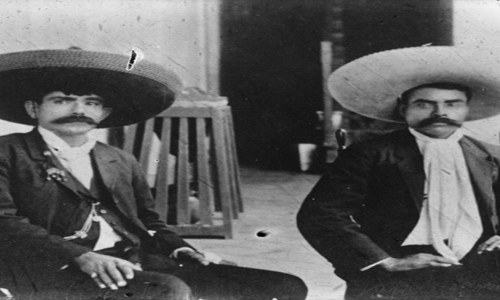
- KKM
Viva Zapata!
arbyscoin - the only crypto you can eat.
Redbrickbear said:
Obviously the South saw slavery as the basis of its economic system.
Lincoln and the Republican Party did as well….and had no objection to its continued existence.
They even offered the Corwin Amendment to make explicit the United States Constitution's protection of slavery.
But slavery was not the cause of the war…secession was the cause of the war.
Lincoln simply would not let the Southern States leave and create a new nation.
He did not care if they held slaves
You are incorrect about Lincoln's views on slavery. Lincoln objected deeply to the idea of slavery.
He did so despite believing in Caucasian superiority. He thought blacks deserved equal rights but that they would not obtain equal status because they did not have the same characteristics as whites. He also recognized the slavery was unsustainable.
Your characterization of the cause of the war is stupidly simplistic. It takes two sides to fight a war. The South seceded so they could enslave people. That is the point of the declaration in the OP. So while Lincoln fought to save the Union, slavery was a "but for" cause of the war.
The fact that in a civilized society 150 years later there are people who say " it would have been a better thing if my ancestors had been allowed to go on enslaving your ancestors for another 25-50 years" demonstrates racism still exists.
Frank Galvin said:Redbrickbear said:
Obviously the South saw slavery as the basis of its economic system.
Lincoln and the Republican Party did as well….and had no objection to its continued existence.
They even offered the Corwin Amendment to make explicit the United States Constitution's protection of slavery.
But slavery was not the cause of the war…secession was the cause of the war.
Lincoln simply would not let the Southern States leave and create a new nation.
He did not care if they held slaves
The fact that in a civilized society 150 years later there are people who say " it would have been a better thing if my ancestors had been allowed to go on enslaving your ancestors for another 25-50 years"
No one said that but you.
Slavery was a massive economic negative to any civilization that practiced it.
The counties with the largest share of slaves are still some of the poorest in America today.
Unfortunately in the words of Thomas Sowell when the Europeans got to Africa…all the Africans had to trade was slaves.
It would have been nice if there was never as transatlantic slave trade at all
Frank Galvin said:Redbrickbear said:
Obviously the South saw slavery as the basis of its economic system.
Lincoln and the Republican Party did as well….and had no objection to its continued existence.
They even offered the Corwin Amendment to make explicit the United States Constitution's protection of slavery.
But slavery was not the cause of the war…secession was the cause of the war.
Lincoln simply would not let the Southern States leave and create a new nation.
He did not care if they held slaves
You are incorrect about Lincoln's views on slavery. Lincoln objected deeply to the idea of slavery.
He did so despite believing in Caucasian superiority. He thought blacks deserved equal rights but that they would not obtain equal status because they did not have the same characteristics as whites. He also recognized the slavery was unsustainable.
Your characterization of the cause of the war is stupidly simplistic. It takes two sides to fight a war. The South seceded so they could enslave people. That is the point of the declaration in the OP. So while Lincoln fought to save the Union, slavery was a "but for" cause of the war.
The fact that in a civilized society 150 years later there are people who say " it would have been a better thing if my ancestors had been allowed to go on enslaving your ancestors for another 25-50 years" demonstrates racism still exists.
Lincoln objected to slavery morally but as a political issue he would not touch it. He believed it was unconstitutional to end slavery and, arguably, it was. The war changed all that: he issued the preliminary Emancipation Proclamation in September 1862, after the Battle of Antietam, and it into effect on January 1, 1863. Later Congress passed and he signed the 13th amendment abolishing it completely. That certainly was constitutional!
historian said:Frank Galvin said:Redbrickbear said:
Obviously the South saw slavery as the basis of its economic system.
Lincoln and the Republican Party did as well….and had no objection to its continued existence.
They even offered the Corwin Amendment to make explicit the United States Constitution's protection of slavery.
But slavery was not the cause of the war…secession was the cause of the war.
Lincoln simply would not let the Southern States leave and create a new nation.
He did not care if they held slaves
You are incorrect about Lincoln's views on slavery. Lincoln objected deeply to the idea of slavery.
He did so despite believing in Caucasian superiority. He thought blacks deserved equal rights but that they would not obtain equal status because they did not have the same characteristics as whites. He also recognized the slavery was unsustainable.
Your characterization of the cause of the war is stupidly simplistic. It takes two sides to fight a war. The South seceded so they could enslave people. That is the point of the declaration in the OP. So while Lincoln fought to save the Union, slavery was a "but for" cause of the war.
The fact that in a civilized society 150 years later there are people who say " it would have been a better thing if my ancestors had been allowed to go on enslaving your ancestors for another 25-50 years" demonstrates racism still exists.
Lincoln objected to slavery morally but as a political issue he would not touch it. He believed it was unconstitutional to end slavery and, arguably, it was. The war changed all that: he issued the preliminary Emancipation Proclamation in September 1862, after the Battle of Antietam, and it into effect on January 1, 1863. Later Congress passed and he signed the 13th amendment abolishing it completely. That certainly was constitutional!
But Frank still thinks the South left the Union only to defend slavery when Lincoln was not interested in interfering in slavery at all…and neither was the Republican Party
"I say that we must not interfere with the institution of slavery in the states where it exists, because the constitution forbids it, and the general welfare does not require us to do so." -Abraham Lincoln, September 17, 1859: Speech at Cincinnati, Ohio
" I have never sought to apply these principles to the old States for the purpose of abolishing slavery in those States. It is nothing but a miserable perversion of what I have said, to assume that I have declared Missouri, or any other slave State shall emancipate her slaves. I have proposed no such thing." -Abraham Lincoln, October 15, 1858: Seventh and Last Debate with Stephen A. Douglas, Alton, Illinois
The Republicans Party was founded in 1856 with its foundation being the immorality of slavery. They wanted it to end but politically did not seek abolition because of the constitutional issue. Their focus was to prevent its expansion. They were able to do that.
historian said:
The Republicans Party was founded in 1856 with its foundation being the immorality of slavery. They wanted it to end but politically did not seek abolition because of the constitutional issue. Their focus was to prevent its expansion. They were able to do that.
With respect
Northern abolitionists had made it perfectly clear their goal was the elimination of slavery without any financial compensation to the owners .
When a single healthy slave was worth almost 1000 dollars. In a time when a skilled white carpenter was fortunate to earn FOUR dollars a DAY.
The Republican Party was the party of the abolitionist movement. The South could clearly see what was coming down the road.
historian said:
The Republicans Party was founded in 1856 with its foundation being the immorality of slavery. .
Do you have any quote from the Republican Party platform that said the party was founded on "the immorality of slavery"
[Sen. Trumbull contrasted this with the Republican creed, which "favors the giving of our public lands to free
white men-not to negro slaves." The audience cheered.' Trumbull's statement captured the guiding principle of the Republican party]
[angry abolitionist, William Lloyd Garrison, complained that "The Republican party has only a geographical aversion to slavery. ... It is a complexional party, exclusively for white men, not for all men, white or black." Another famous abolitionist, Frederick Douglass, made a similar observation about the nature of the early Republican party. "The cry of Free Men," Douglass lamented, "was raised not for the extension of liberty to the black man, but for the protection of the liberty of the white." Most, if not all, abolitionists accepted these contemporary estimates of Republican racism]
[In 1846, Congressman David Wilmot tried to bar slavery in the southwestern territories obtained from the Mexican-American War. What Wilmot named the "White Man's Proviso" did not materialize. But if there was a single organizing principle of Wilmot's Republican Party in 1854, then it was opposing the expansion of slavery, authorized that year by the Kansas-Nebraska Act; it was keeping enslaved and free black people off of free white soil in the West and North. As for those in the GOP who were advocating interracial free soil, historians today identify them as the "Radical Republicans." But these radicals hardly controlled the Party of Lincoln.]

The key word there is "necessary."Redbrickbear said:ATL Bear said:It is the cause for secession and rebellion in both instances that is at issue. The Declaration of Independence laid out the reason for rebellion from England, just as the Declaration of Causes laid out the secession from the United States. This semantic legal argument is a distraction from the clear fact slavery drove the decision and rebellion...Redbrickbear said:historian said:
Maybe emotionally, but not legally. Lincoln made a strong case against secession in his first inaugural address.
.
Of course he did.
Because symbolically he was standing in the same place as George III was 90 years before…..those dastardly rebels needed to be kept in line and under control.
Of course it just makes Lincoln more of a hypocrite that he was making war when secession was NOT illegal by US law at the time. While secession was illegal under British law.
The British at least had the law on their side…Lincoln did not
But in all honesty that is not the issue.
For good reasons or bad…whenever a sovereign political entity (and the people) wish to dissolve the bonds which have connected them to another..they may do so.
Independence is the prime goal and right
"When in the course of human events, it becomes necessary for one people to dissolve the political bonds which have connected them with another, and to assume among the powers of the earth the separate and equal station to which the laws of nature and of Nature's God entitle them…" -American Declaration of Independence, 4 July 1776
"…the Powers of Government may be reassumed by the People, whensoever it shall become necessary to their Happiness…" - New York Ratifying Convention, July 26, 1788
"we are struggling for constitutional freedom. We are upholding the great principles which our fathers bequeathed us, and if we should succeed, and become, as we shall, the dominant nation of this continent, we shall perpetuate and diffuse the very liberty for which Washington bled, and which the heroes of the Revolution achieved. We are not revolutionists we are resisting revolution. We are upholding the true doctrines of the Federal Constitution. We are conservative. Our success is the triumph of all that has been considered established in the past." - James Henley Thornwell
"The Earth is littered with the ruins of empires that once believed they were eternal."
-Percy Shelley
Secession is a remedy, not a right. Whether it's justified depends on the nature of the grievance.
KaiBear said:historian said:
The Republicans Party was founded in 1856 with its foundation being the immorality of slavery. They wanted it to end but politically did not seek abolition because of the constitutional issue. Their focus was to prevent its expansion. They were able to do that.
With respect
Northern abolitionists had made it perfectly clear their goal was the elimination of slavery without any financial compensation to the owners .
When a single healthy slave was worth almost 1000 dollars. In a time when a skilled white carpenter was fortunate to earn FOUR dollars a DAY.
The Republican Party was the party of the abolitionist movement. The South could clearly see what was coming down the road.
Northern abolitionists certainly wanted immediate emancipation (& some radicals also wanted equality) but they had no political power. The earlier abolitionist parties were typical third party movements that didn't last long and never, to my knowledge, won election to any major office. The most they did, perhaps, as to help 1-2 presidential candidates win by dividing votes for the other major party candidate.
Wanting something politically and achieving it are two different things. Someone once said (Machiavelli?) that "politics is the art of the possible." By the time the GOP was founded in 1856, the anti slavery politicians had learned the lesson. That's why their goals were more modest.
They were also more attainable. They sought to prevent the US adding any more slave states. Texas in 1845 was the last slave state to be admitted.
The only time the Radical Republicans had any real power was during Reconstruction and that was because of a unique set of circumstances resulting from Union victory in the war, the assassination on President Lincoln, & the failed impeachment of Andrew Johnson.
EXACTLYhistorian said:KaiBear said:historian said:
The Republicans Party was founded in 1856 with its foundation being the immorality of slavery. They wanted it to end but politically did not seek abolition because of the constitutional issue. Their focus was to prevent its expansion. They were able to do that.
With respect
Northern abolitionists had made it perfectly clear their goal was the elimination of slavery without any financial compensation to the owners .
When a single healthy slave was worth almost 1000 dollars. In a time when a skilled white carpenter was fortunate to earn FOUR dollars a DAY.
The Republican Party was the party of the abolitionist movement. The South could clearly see what was coming down the road.
They sought to prevent the US adding any more slave states. Texas in 1845 was the last slave state to be admitted.
Jefferson Davis and other southerners in the Senate and House were keenly aware that since no more slave states were going to be allowed into the Union; the political balance of power in both chambers would irrevocably be handed to Northern Republicans and their abolitionist supporters.
The South was politically trapped and economically threatened.
In addition the prior slaughter of thousands of French inhabitants of Haiti ( only a handful of women were spared to be concubines ) by black revolutionists terrified Jefferson Davis and other slave owners.
Who sincerely believed that key Northern abolitionists would turn a blind to such a widespread massacre occuring in the South.
If you're referring to Saint Domingue, Jefferson Davis wasn't even born when that was concluded. It was pivotal in King George ending slavery in the British Empire.KaiBear said:EXACTLYhistorian said:KaiBear said:historian said:
The Republicans Party was founded in 1856 with its foundation being the immorality of slavery. They wanted it to end but politically did not seek abolition because of the constitutional issue. Their focus was to prevent its expansion. They were able to do that.
With respect
Northern abolitionists had made it perfectly clear their goal was the elimination of slavery without any financial compensation to the owners .
When a single healthy slave was worth almost 1000 dollars. In a time when a skilled white carpenter was fortunate to earn FOUR dollars a DAY.
The Republican Party was the party of the abolitionist movement. The South could clearly see what was coming down the road.
They sought to prevent the US adding any more slave states. Texas in 1845 was the last slave state to be admitted.
Jefferson Davis and other southerners in the Senate and House were keenly aware that since no more slave states were going to be allowed into the Union; the political balance of power in both chambers would irrevocably be handed to Northern Republicans and their abolitionist supporters.
The South was politically trapped and economically threatened.
In addition the prior slaughter of thousands of French inhabitants of Haiti ( only a handful of women were spared to be concubines ) by black revolutionists terrified Jefferson Davis and other slave owners.
Who sincerely believed that key Northern abolitionists would turn a blind to such a widespread massacre occuring in the South.
And there were proposals for compensating slave owners. They did it in DC at $300 per freed slave. There was a real entrenchment of the slave trade in the South, not just for labor but the actual buying and selling of slaves. Once the major empires started to abolish and/or restrain the slave trade within their colonies, the domestic slave trade grew exponentially. Probably why the proposals floated weren't enough.
ATL Bear said:If you're referring to Saint Domingue, Jefferson Davis wasn't even born when that was concluded. It was pivotal in King George ending slavery in the British Empire.KaiBear said:EXACTLYhistorian said:KaiBear said:historian said:
The Republicans Party was founded in 1856 with its foundation being the immorality of slavery. They wanted it to end but politically did not seek abolition because of the constitutional issue. Their focus was to prevent its expansion. They were able to do that.
With respect
Northern abolitionists had made it perfectly clear their goal was the elimination of slavery without any financial compensation to the owners .
When a single healthy slave was worth almost 1000 dollars. In a time when a skilled white carpenter was fortunate to earn FOUR dollars a DAY.
The Republican Party was the party of the abolitionist movement. The South could clearly see what was coming down the road.
They sought to prevent the US adding any more slave states. Texas in 1845 was the last slave state to be admitted.
Jefferson Davis and other southerners in the Senate and House were keenly aware that since no more slave states were going to be allowed into the Union; the political balance of power in both chambers would irrevocably be handed to Northern Republicans and their abolitionist supporters.
The South was politically trapped and economically threatened.
In addition the prior slaughter of thousands of French inhabitants of Haiti ( only a handful of women were spared to be concubines ) by black revolutionists terrified Jefferson Davis and other slave owners.
Who sincerely believed that key Northern abolitionists would turn a blind to such a widespread massacre occuring in the South.
And there were proposals for compensating slave owners. They did it in DC at $300 per freed slave. There was a real entrenchment of the slave trade in the South, not just for labor but the actual buying and selling of slaves. Once the major empires started to abolish and/or restrain the slave trade within their colonies, the domestic slave trade grew exponentially. Probably why the proposals floated weren't enough.
Only said 'prior'.
And ALL southern slave owners were very aware what happened to the French in Haiti.
It makes gruesome reading.
Probably why many current authors choose to ignore the event.
The Jacobin revolutionaries throughout the French empire were notably brutal, including those in Paris.KaiBear said:ATL Bear said:If you're referring to Saint Domingue, Jefferson Davis wasn't even born when that was concluded. It was pivotal in King George ending slavery in the British Empire.KaiBear said:EXACTLYhistorian said:KaiBear said:historian said:
The Republicans Party was founded in 1856 with its foundation being the immorality of slavery. They wanted it to end but politically did not seek abolition because of the constitutional issue. Their focus was to prevent its expansion. They were able to do that.
With respect
Northern abolitionists had made it perfectly clear their goal was the elimination of slavery without any financial compensation to the owners .
When a single healthy slave was worth almost 1000 dollars. In a time when a skilled white carpenter was fortunate to earn FOUR dollars a DAY.
The Republican Party was the party of the abolitionist movement. The South could clearly see what was coming down the road.
They sought to prevent the US adding any more slave states. Texas in 1845 was the last slave state to be admitted.
Jefferson Davis and other southerners in the Senate and House were keenly aware that since no more slave states were going to be allowed into the Union; the political balance of power in both chambers would irrevocably be handed to Northern Republicans and their abolitionist supporters.
The South was politically trapped and economically threatened.
In addition the prior slaughter of thousands of French inhabitants of Haiti ( only a handful of women were spared to be concubines ) by black revolutionists terrified Jefferson Davis and other slave owners.
Who sincerely believed that key Northern abolitionists would turn a blind to such a widespread massacre occuring in the South.
And there were proposals for compensating slave owners. They did it in DC at $300 per freed slave. There was a real entrenchment of the slave trade in the South, not just for labor but the actual buying and selling of slaves. Once the major empires started to abolish and/or restrain the slave trade within their colonies, the domestic slave trade grew exponentially. Probably why the proposals floated weren't enough.
Only said 'prior'.
And ALL southern slave owners were very aware what happened to the French in Haiti.
It makes gruesome reading.
Probably why many current authors choose to ignore the event.
Why would anyone suggest compensating slave owners for their slaves? That's the stupidest logic I have heard yet.
Because that's how most of the empires abolished slavery and peacefully transitioned out of it, including the British and Spanish. The world at that time did not have our modern sense of human rights or equality. As if to drive home the point, many of the agreements not only paid the slave owner but required the slave to work for a period of time after payment as part of the deal.One-Eyed Wheeler said:
Why would anyone suggest compensating slave owners for their slaves? That's the stupidest logic I have heard yet.
The "Reign of Terror" is called that for a reason. And it only lasted a year.
Slaves were still considered "property", and they were in a strictly legal sense. (As horrific as that sounds to us today). We must remember that slavery and the antebellum attitudes towards it have been part of human civilization everywhere for millennia. Our modem attitudes about it are only from the last 200-300 years.
T-Lo carried it on a little longer in Saint Domingue.historian said:
The "Reign of Terror" is called that for a reason. And it only lasted a year.
Slave rebellions tend to be very brutal, as are their suppression. Spartacus in Ancient Rome & Nat Turner in 1831 Virginia ard two examples.
Actually, it makes considering what is at stake for all involved.
Actually, it makes considering what is at stake for all involved.
historian said:
Slave rebellions tend to be very brutal, as are their suppression.
Actually, it makes considering what is at stake for all involved.
Correct again
Southern slave owners feared any potential slave rebellion.
They did not wish to be massacred by the thousands like the French in Haiti .
Which again contributed to southern fears of political and economic entrapment by the North.
The massacres are rarely discussed these days.
As details of the gruesome mass killings do not fit in our current narratives.
One-Eyed Wheeler said:Completely untrue. I continually roll my eyes at those of you that keep insisting slavery wasn't the issue.Redbrickbear said:
Obviously the South saw slavery as the basis of its economic system.
Lincoln and the Republican Party did as well….and had no objection to its continued existence.
They even offered the Corwin Amendment to make explicit the United States Constitution's protection of slavery.
But slavery was not the cause of the war…secession was the cause of the war.
Lincoln simply would not let the Southern States leave and create a new nation.
He did not care if they held slaves
Wouldn't that be eye?
KaiBear said:historian said:
Slave rebellions tend to be very brutal, as are their suppression.
Actually, it makes considering what is at stake for all involved.
Correct again
Southern slave owners feared any potential slave rebellion.
They did not wish to be massacred by the thousands like the French in Haiti .
Which again contributed to southern fears of political and economic entrapment by the North.
The massacres are rarely discussed these days.
As details of the gruesome mass killings do not fit in our current narratives.
Southerners were terrified of a slave rebellion. Funny thing is that there were so few. Most were just plots that were discovered in advance (Denmark Vessey, Gabriel Prosser). Only Nat Turner was an actual outbreak of violence and that was very isolated. Harper's Ferry on the eve of the war was a bit of both but also a fiasco. John Brown's crazy fantasy had zero chance of achieving anything, except maybe unite southerners into preparing for war.
What is truly amazing, despite all this, is that by the end of the war the Confederates were planning to arm the slaves and ask them to fight for the Confederacy. That shows how desperate they were by 1865.
Massacres are what Hamas & other terrorists do to Israelis. Americans tend to think of it as a problem for other places. They must have forgotten that Americans were victims on October 7 too & that some Americans are still being held hostage.
One-Eyed Wheeler said:
Why would anyone suggest compensating slave owners for their slaves? That's the stupidest logic I have heard yet.
End slavery without killing off two percent of the population? Seems like a great idea to me.
A. Would have possibly been less expensive than 4 years of war and 12 years of reconstruction.One-Eyed Wheeler said:
Why would anyone suggest compensating slave owners for their slaves? That's the stupidest logic I have heard yet.
B. Would have saved the lives of approximately 700,000 Americans. ( In a time when the country population was less than 40 million )
C. Would have spared the individuals who were permanently crippled from their war related wounds.
D. Would have allowed for a far more orderly transition for blacks into the responsibilities related to freedom.
But that requires rational thinking and on such issues people tend to avoid rationality.
Uh, because the literally did do that in the District of Columbia.One-Eyed Wheeler said:
Why would anyone suggest compensating slave owners for their slaves? That's the stupidest logic I have heard yet.
New Jersey rolled out a compensation scheme for their slave owners.
Britain did it in Jamaica and the Caribbean islands.
And Brazil did it as well on a massive level.
You are kidding right?
[At the Hampton's Road conference with Stephens in 1864, he supported reunion and allow the courts to work out emancipation. Lincoln's obsession was with the Union - not slaves. Lincoln reportedly told the Confederates that Northern opinion was very much divided on the question of how these new laws would be enforced. Regarding the Emancipation Proclamation, Lincoln reportedly interpreted it as a war measure that would permanently affect only the 200,000 people who came under direct Army control during the War. Seward reportedly showed the Confederates a copy of the newly adopted Thirteenth Amendment, referred to this document also as a war measure only, and suggested that if they were to rejoin the Union, they might be able to prevent its ratification. After further discussion, Lincoln suggested that the Southern states might "avoid, as far as possible, the evils of immediate emancipation" Lincoln also offered possible compensation for emancipation, naming the figure of $400,000,000 which he later proposed to Congress. Reportedly, Seward disagreed with Lincoln about the price; Lincoln responded that the North had been complicit in the slave trade.]
Link ?Redbrickbear said:Uh because the literally did do in the District of Columbia.One-Eyed Wheeler said:
Why would anyone suggest compensating slave owners for their slaves? That's the stupidest logic I have heard yet.
New Jersey rolled out a compensation scheme for their slave owners.
Britain did it in Jamaica and the Caribbean islands.
And Brazil did it as well on a massive level.
You are kidding right?
After further discussion, Lincoln suggested that the Southern states might "avoid, as far as possible, the evils of immediate emancipation" Lincoln also offered possible compensation for emancipation, naming the figure of $400,000,000 which he later proposed to Congress. Reportedly, Seward disagreed with Lincoln about the price; Lincoln responded that the North had been complicit in the slave trade.]
KaiBear said:Link ?Redbrickbear said:Uh because the literally did do in the District of Columbia.One-Eyed Wheeler said:
Why would anyone suggest compensating slave owners for their slaves? That's the stupidest logic I have heard yet.
New Jersey rolled out a compensation scheme for their slave owners.
Britain did it in Jamaica and the Caribbean islands.
And Brazil did it as well on a massive level.
You are kidding right?
After further discussion, Lincoln suggested that the Southern states might "avoid, as far as possible, the evils of immediate emancipation" Lincoln also offered possible compensation for emancipation, naming the figure of $400,000,000 which he later proposed to Congress. Reportedly, Seward disagreed with Lincoln about the price; Lincoln responded that the North had been complicit in the slave trade.]
Johnson, "Lincoln's Solution to the Problem of Peace Terms" (1968), pp. 582-583.
https://en.wikipedia.org/wiki/Hampton_Roads_Conference
[The president did indicate support for federal compensation for slaveholders....Declaring that the North bore some responsibility for slavery, Lincoln expressed the belief that the Northern people would be in favor of "paying a fair indemnity for the loss to (slave) owners." He cited a figure of $400,000,000 as a fair amount that Congress might appropriate for this purpose...Though not revealed at the Hampton Roads Conference, Lincoln had another reason -and perhaps a more compelling one- for advocating compensation to Southerners for the loss of their slaves. He believed that money payments for slaves would help reduce Southern hostility to reunion and avert the kind of guerrilla activity that the war had produced in Missouri and Kentucky. While personally supporting compensation for slaveholders, Lincoln reminded the Confederate commissioners that only Congress could authorize it.]
https://quod.lib.umich.edu/j/jala/2629860.0021.104/--hampton-roads-peace-conference-a-final-test-of-lincolns?rgn=main;view=fulltext