Supreme Court Curbs Use Of Race In Drawing Voting Districts

8,352 Views | 141 Replies | Last: 5 days ago by Redbrickbear
Harrison Bergeron
How long do you want to ignore this user?
It was a fair, logical decision consistent with American values.

We have learned this year that T'RACISM largely is funded and created by tax dollars and radical, left-wing groups like the Southern Poverty Law Center.
historian
How long do you want to ignore this user?
Redbrickbear said:

Frank Galvin said:

Absolutely oppose gerrymandering. BTW, the Merriam Webster definition of gerrymandering is:

"the practice of dividing or arranging a territorial unit into election districts in a way that gives one political party an unfair advantage in elections"

The idea that the GOP will not use this decision to gerrymander is preposterous. The aim and result will be to further reduce minority representation at all levels of power because minorities tend to vote Democrat.


1. Democrats have been gerrymandering for decades

So you don't care about that…you just don't like it when Republicans do it

2. "Minorities" is a meaningless term. In California and Texas White people are a minority. And there are at least 9 States where that is true and more to follow.

So your thinking on that is outdated

3. Many groups that you think of as minorities are moving to the conservative end of the voting spectrum.

Hispanics in Texas have been moving toward the Republican Party for years

So in this case you are just talking about Black Americans being very loyal to the Democratic Party and not minorities in general

Good points, but some historical context:

Actually, gerrymandering goes back 200 years. It began in Massachusetts when Gov Elbridge Gerry pushed a redistricting map that critics argued resembled a salamander. Here's some of that history:

https://blogs.loc.gov/loc/2024/07/gerrymandering-the-origin-story/

Yes, Gerry was a Democrat (actually a Democratic-Republican, a precursor to the modern party).

Also, blacks voted for Trump in record numbers in 2024. It remains to be seen if that will continue for Vance or Rubio in 2028 (or whomever).
historian
How long do you want to ignore this user?
For those who think that people can only be represented in Congress by someone of their own ethnicity, an absurdly racist and impossible proposition, Rep Wesley Hung has the perfect response:

historian
How long do you want to ignore this user?
New England has zero Republican representation and it has been this way for years. Voters tend to vote around 40% Republican. The blue states have been gerrymandering against the GOP for years so their whining about red states doing it in 2026 is simply another example of Leftist hypocrisy.

Since much of the Leftist district lines were deans with race in mind, I would not be too surprised if blue state maps were challenged in the courts (looking at you California & Illinois). The long term impact of this case could be much greater.
Danielsjackson114
How long do you want to ignore this user?
historian said:

For those who think that people can only be represented in Congress by someone of their own ethnicity, an absurdly racist and impossible proposition, Rep Wesley Hung has the perfect response:


Freudian slip?
historian
How long do you want to ignore this user?
Interesting article on the Calais decision:

House Redistricting Strategery the Endgame?

https://redstate.com/adam-turner/2026/05/02/house-redistricting-strategery-the-endgame-n2201901

My favorite quote:

"I say we take off and nuke the site from orbit. It's the only way to be sure."

I liked the movie and it's a clever metaphor
LIB,MR BEARS
How long do you want to ignore this user?
https://www.facebook.com/share/181vxgqj2i/?mibextid=wwXIfr
historian
How long do you want to ignore this user?
Sam Lowry
How long do you want to ignore this user?
A shameful decision which effectively removes all restraints from both racial and partisan gerrymandering. Justice Kagan's dissent is in top form.

This is what it looks like when "conservatives" legislate from the bench.
EatMoreSalmon
How long do you want to ignore this user?
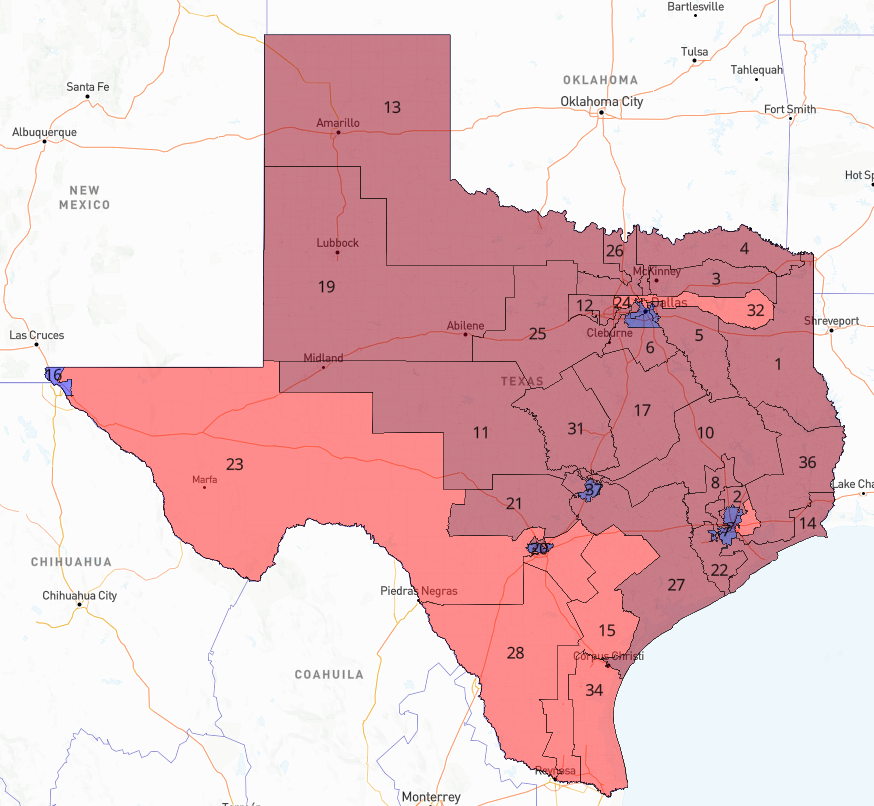
Virginia's version of gerrymandering


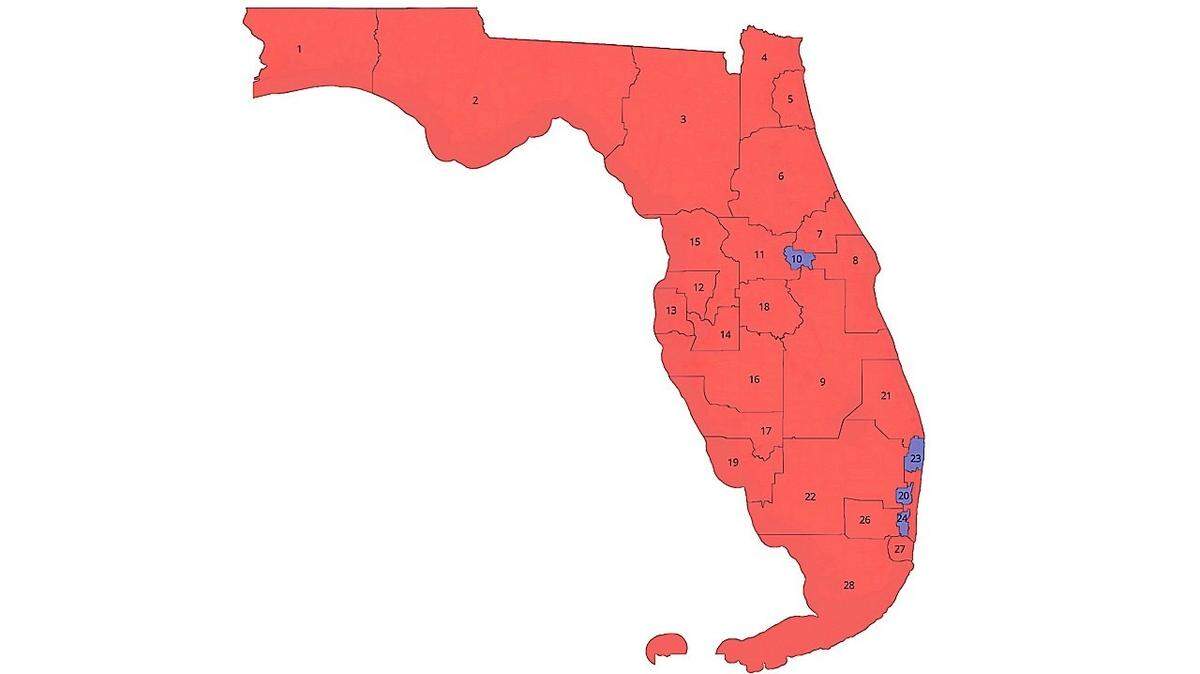
Florida's version of gerrymandering


Illinois' version of gerrymandering

?fit=900%2C568&quality=100&ssl=1

Texas' version of gerrymandering


Repubs aren't as artsy in their newfound gerrymandering just yet.
cowboycwr
How long do you want to ignore this user?
EatMoreSalmon said:

Virginia's version of gerrymandering


Florida's version of gerrymandering


Illinois' version of gerrymandering

?fit=900%2C568&quality=100&ssl=1

Texas' version of gerrymandering


Repubs aren't as artsy in their newfound gerrymandering just yet.

I don't see gerrymandering in TX or Florida. Just neat districts. Some happen to be blue. Some red.
EatMoreSalmon
How long do you want to ignore this user?
cowboycwr said:

EatMoreSalmon said:

Virginia's version of gerrymandering


Florida's version of gerrymandering


Illinois' version of gerrymandering

?fit=900%2C568&quality=100&ssl=1

Texas' version of gerrymandering


Repubs aren't as artsy in their newfound gerrymandering just yet.

I don't see gerrymandering in TX or Florida. Just neat districts. Some happen to be blue. Some red.


Yep. When you are trying to cut off the rural vote you have to elongate big city districts around the conservative leaning suburbs. Makes for a more intricate and complex map showing lots of imagination.
cowboycwr
How long do you want to ignore this user?
EatMoreSalmon said:

cowboycwr said:

EatMoreSalmon said:

Virginia's version of gerrymandering


Florida's version of gerrymandering


Illinois' version of gerrymandering

?fit=900%2C568&quality=100&ssl=1

Texas' version of gerrymandering


Repubs aren't as artsy in their newfound gerrymandering just yet.

I don't see gerrymandering in TX or Florida. Just neat districts. Some happen to be blue. Some red.


Yep. When you are trying to cut off the rural vote you have to elongate big city districts around the conservative leaning suburbs. Makes for a more intricate and complex map showing lots of imagination.

Exactly.

People seem to forget it isn't about land size. It is about trying to make the districts as close to equal pupulation wise as you can get, which means the lines will not be perfect shapes like squares or rectangles and will be larger in rural areas and that the borders need to be clear physical boundaries as often as possible like a river, county line, or major road.

In densely populated areas that also means the district will be very small as you can get the required population in a square mile or less.


Mitch Blood Green
How long do you want to ignore this user?
Frank Galvin said:

Osodecentx said:

Frank Galvin said:

Osodecentx said:

Back to the decision
It is a solid decision legally. Time to put race behind us in college admissions & redistricting


The Supreme Court isn't supposed to make those type of decisions. It is supposed to interpret the Constitutuion and statute. Its reading of the VRA in light of teh 14th Amendment is absurd.


VRA doesn't trump the Constitution. It's a sound decision

It is an Alice in Wonderland deciscion. The Court found that creatng a majority-minority district violated the equal protection rights of non-African American voters even though it was necessary to comply with VRA Sec. 2. The defendants argued the map was drawn in its weird gerrymandered way to protect Republican incumbents, including Speaker Johnson. In other words, the crazy lines are not something they asked for or were necessary to satisfy VRA 2. Because it was the GOP that drew the map. SCOTUS said no, it has to be about race.

Yet, in every case where minorities' chances of representation are decreased by new maps (say in Texas) the Court says "not about race, just partisan politics and we are powerless to stop that). Even when there are admissions from the new map proponents that the voting power of minorities need to be diluted, as there was in the Texas case.

Complete, utter BS with not an ounce of logical consistency.


How is partisan districts ok? There are better was to draw districts especially with our technology advancement since 1964. We won't.

What is unspoken in these court decisions is the purpose of the VRA in 1964 hasn't changed one bit. States have a chance to do what "fair" for its citizens. They won't. Louisiana, Alabama, Mississippi will draw maps just like their grandparents did. And if it disenfranchises 40% of the voters? That's legal?
LIB,MR BEARS
How long do you want to ignore this user?
Mitch Blood Green said:

Frank Galvin said:

Osodecentx said:

Frank Galvin said:

Osodecentx said:

Back to the decision
It is a solid decision legally. Time to put race behind us in college admissions & redistricting


The Supreme Court isn't supposed to make those type of decisions. It is supposed to interpret the Constitutuion and statute. Its reading of the VRA in light of teh 14th Amendment is absurd.


VRA doesn't trump the Constitution. It's a sound decision

It is an Alice in Wonderland deciscion. The Court found that creatng a majority-minority district violated the equal protection rights of non-African American voters even though it was necessary to comply with VRA Sec. 2. The defendants argued the map was drawn in its weird gerrymandered way to protect Republican incumbents, including Speaker Johnson. In other words, the crazy lines are not something they asked for or were necessary to satisfy VRA 2. Because it was the GOP that drew the map. SCOTUS said no, it has to be about race.

Yet, in every case where minorities' chances of representation are decreased by new maps (say in Texas) the Court says "not about race, just partisan politics and we are powerless to stop that). Even when there are admissions from the new map proponents that the voting power of minorities need to be diluted, as there was in the Texas case.

Complete, utter BS with not an ounce of logical consistency.


How is partisan districts ok? There are better was to draw districts especially with our technology advancement since 1964. We won't.

What is unspoken in these court decisions is the purpose of the VRA in 1964 hasn't changed one bit. States have a chance to do what "fair" for its citizens. They won't. Louisiana, Alabama, Mississippi will draw maps just like their grandparents did. And if it disenfranchises 40% of the voters? That's legal?

To be fair, take this argument to the northeast so that Rs get equal representation.
Mitch Blood Green
How long do you want to ignore this user?
historian said:

For those who think that people can only be represented in Congress by someone of their own ethnicity, an absurdly racist and impossible proposition, Rep Wesley Hung has the perfect response:


You can be fairly represented by a person not the same race as you UNLESS there is an intentional dilution of your community interest. There are different issues as it relates to farming communities and urban communities. A skilled politician can navigate them both but not in this environment. Urban issues tend to be Democrat issues and rural issues republican issues. They shouldn't be. They are. Urban voters should care about farming.

This government is strictly partisan. That's what gerrymandering gets you.

So, if you take south Dallas and stretch it through Waco into Temple/Killen that rep met never get north of Hillsboro.

Bring back the pork. You can count on my vote for hurricane sirens if you support free lunch.
LIB,MR BEARS
How long do you want to ignore this user?
Mitch Blood Green said:

historian said:

For those who think that people can only be represented in Congress by someone of their own ethnicity, an absurdly racist and impossible proposition, Rep Wesley Hung has the perfect response:


You can be fairly represented by a person not the same race as you UNLESS there is an intentional dilution of your community interest. There are different issues as it relates to farming communities and urban communities. A skilled politician can navigate them both but not in this environment. Urban issues tend to be Democrat issues and rural issues republican issues. They shouldn't be. They are. Urban voters should care about farming.

This government is strictly partisan. That's what gerrymandering gets you.

So, if you take south Dallas and stretch it through Waco into Temple/Killen that rep met never get north of Hillsboro.

Bring back the pork. You can count on my vote for hurricane sirens if you support free lunch.


Bob Poague and Chet Edwards loved the gerrymandering that kept them in Congress for 40 and 20 years respectively.
Mitch Blood Green
How long do you want to ignore this user?
LIB,MR BEARS said:

Mitch Blood Green said:

Frank Galvin said:

Osodecentx said:

Frank Galvin said:

Osodecentx said:

Back to the decision
It is a solid decision legally. Time to put race behind us in college admissions & redistricting


The Supreme Court isn't supposed to make those type of decisions. It is supposed to interpret the Constitutuion and statute. Its reading of the VRA in light of teh 14th Amendment is absurd.


VRA doesn't trump the Constitution. It's a sound decision

It is an Alice in Wonderland deciscion. The Court found that creatng a majority-minority district violated the equal protection rights of non-African American voters even though it was necessary to comply with VRA Sec. 2. The defendants argued the map was drawn in its weird gerrymandered way to protect Republican incumbents, including Speaker Johnson. In other words, the crazy lines are not something they asked for or were necessary to satisfy VRA 2. Because it was the GOP that drew the map. SCOTUS said no, it has to be about race.

Yet, in every case where minorities' chances of representation are decreased by new maps (say in Texas) the Court says "not about race, just partisan politics and we are powerless to stop that). Even when there are admissions from the new map proponents that the voting power of minorities need to be diluted, as there was in the Texas case.

Complete, utter BS with not an ounce of logical consistency.


How is partisan districts ok? There are better was to draw districts especially with our technology advancement since 1964. We won't.

What is unspoken in these court decisions is the purpose of the VRA in 1964 hasn't changed one bit. States have a chance to do what "fair" for its citizens. They won't. Louisiana, Alabama, Mississippi will draw maps just like their grandparents did. And if it disenfranchises 40% of the voters? That's legal?

To be fair, take this argument to the northeast so that Rs get equal representation.


Take it anywhere you'd like. How's partisan districts ok?

Congress should not be choosing their voters. Voters should be choosing their representatives.
EatMoreSalmon
How long do you want to ignore this user?
Mitch Blood Green said:

LIB,MR BEARS said:

Mitch Blood Green said:

Frank Galvin said:

Osodecentx said:

Frank Galvin said:

Osodecentx said:

Back to the decision
It is a solid decision legally. Time to put race behind us in college admissions & redistricting


The Supreme Court isn't supposed to make those type of decisions. It is supposed to interpret the Constitutuion and statute. Its reading of the VRA in light of teh 14th Amendment is absurd.


VRA doesn't trump the Constitution. It's a sound decision

It is an Alice in Wonderland deciscion. The Court found that creatng a majority-minority district violated the equal protection rights of non-African American voters even though it was necessary to comply with VRA Sec. 2. The defendants argued the map was drawn in its weird gerrymandered way to protect Republican incumbents, including Speaker Johnson. In other words, the crazy lines are not something they asked for or were necessary to satisfy VRA 2. Because it was the GOP that drew the map. SCOTUS said no, it has to be about race.

Yet, in every case where minorities' chances of representation are decreased by new maps (say in Texas) the Court says "not about race, just partisan politics and we are powerless to stop that). Even when there are admissions from the new map proponents that the voting power of minorities need to be diluted, as there was in the Texas case.

Complete, utter BS with not an ounce of logical consistency.


How is partisan districts ok? There are better was to draw districts especially with our technology advancement since 1964. We won't.

What is unspoken in these court decisions is the purpose of the VRA in 1964 hasn't changed one bit. States have a chance to do what "fair" for its citizens. They won't. Louisiana, Alabama, Mississippi will draw maps just like their grandparents did. And if it disenfranchises 40% of the voters? That's legal?

To be fair, take this argument to the northeast so that Rs get equal representation.


Take it anywhere you'd like. How's partisan districts ok?

Congress should not be choosing their voters. Voters should be choosing their representatives.

State legislatures choose the district lines, not Congress. States are already incentivized to get reps in Congress that will benefit the State. It is up to the citizens of the state to keep the State representative of them.
LIB,MR BEARS
How long do you want to ignore this user?
Mitch Blood Green said:

LIB,MR BEARS said:

Mitch Blood Green said:

Frank Galvin said:

Osodecentx said:

Frank Galvin said:

Osodecentx said:

Back to the decision
It is a solid decision legally. Time to put race behind us in college admissions & redistricting


The Supreme Court isn't supposed to make those type of decisions. It is supposed to interpret the Constitutuion and statute. Its reading of the VRA in light of teh 14th Amendment is absurd.


VRA doesn't trump the Constitution. It's a sound decision

It is an Alice in Wonderland deciscion. The Court found that creatng a majority-minority district violated the equal protection rights of non-African American voters even though it was necessary to comply with VRA Sec. 2. The defendants argued the map was drawn in its weird gerrymandered way to protect Republican incumbents, including Speaker Johnson. In other words, the crazy lines are not something they asked for or were necessary to satisfy VRA 2. Because it was the GOP that drew the map. SCOTUS said no, it has to be about race.

Yet, in every case where minorities' chances of representation are decreased by new maps (say in Texas) the Court says "not about race, just partisan politics and we are powerless to stop that). Even when there are admissions from the new map proponents that the voting power of minorities need to be diluted, as there was in the Texas case.

Complete, utter BS with not an ounce of logical consistency.


How is partisan districts ok? There are better was to draw districts especially with our technology advancement since 1964. We won't.

What is unspoken in these court decisions is the purpose of the VRA in 1964 hasn't changed one bit. States have a chance to do what "fair" for its citizens. They won't. Louisiana, Alabama, Mississippi will draw maps just like their grandparents did. And if it disenfranchises 40% of the voters? That's legal?

To be fair, take this argument to the northeast so that Rs get equal representation.


Take it anywhere you'd like. How's partisan districts ok?

Congress should not be choosing their voters. Voters should be choosing their representatives.

For every action there is an equal but opposite reaction. This law also applies in politics.

I'm not saying I like it but, until it's fixed Rs need to be better at manipulating the rules than Ds.
Redbrickbear
How long do you want to ignore this user?
Sam Lowry said:

A shameful decision which effectively removes all restraints from both racial and partisan gerrymandering. Justice Kagan's dissent is in top form.

This is what it looks like when "conservatives" legislate from the bench.


It's not "legislating from the bench" to rule on what the Constitution actually says…

The U.S. Constitution gives the power of congressional district drawing to the States.

(technically the Federal Government does not have any more powers than what the States have granted to it in the written Constitution…listed and limited)

There is not some magic rule in the Constitution that allows racial districts to forced on the States.

PS

What was in fact legislating from the bench was when Federal judges ruled in the past that the Voting Rights act (not a part of the actual Constitution) somehow demanded this to take place.

"Under precedents established by cases like Gingles, the VRA has been interpreted to require the creation of districts where minority groups can elect candidates.."
Sam Lowry
How long do you want to ignore this user?
Redbrickbear said:

Sam Lowry said:

A shameful decision which effectively removes all restraints from both racial and partisan gerrymandering. Justice Kagan's dissent is in top form.

This is what it looks like when "conservatives" legislate from the bench.


It's not "legislating from the bench" to rule on what the Constitution actually says…

The U.S. Constitution gives the power of congressional district drawing to the States.

(technically the Federal Government does not have any more powers that what the States have granted to it in the written Constitution…listed and limited)

There is not some magic rule in the Constitution that allows racial districts to forced on the States.


This was a VRA case. Congress wrote the law, and the Court rewrote it.
Redbrickbear
How long do you want to ignore this user?
Sam Lowry said:

Redbrickbear said:

Sam Lowry said:

A shameful decision which effectively removes all restraints from both racial and partisan gerrymandering. Justice Kagan's dissent is in top form.

This is what it looks like when "conservatives" legislate from the bench.


It's not "legislating from the bench" to rule on what the Constitution actually says…

The U.S. Constitution gives the power of congressional district drawing to the States.

(technically the Federal Government does not have any more powers that what the States have granted to it in the written Constitution…listed and limited)

There is not some magic rule in the Constitution that allows racial districts to forced on the States.


This was a VRA case. Congress wrote the law, and the Court rewrote it.


The VRA is not a part of our Constitution

No civil right law trumps or supersedes the actual Constitution of the United States.

PS

The Supreme Court did not even "rewrite" the Voting rights act.

It simply applied stricter legal tests to determine compliance

[The Court has narrowed the law's reach by changing the legal tests used in federal courts…
Shift to "Intentional" Discrimination:
In Louisiana v. Callais, the Court established that Section 2 of the VRA primarily prohibits intentional racial discrimination. Previously, plaintiffs only had to show that a map or law had a discriminatory effect (known as the "results test").
Proof of "Race vs. Politics":
The Court now requires plaintiffs to "disentangle" race from partisanship. If a state claims its map was drawn for partisan advantage rather than racial reasons, the VRA may no longer apply..]

That's changing legal tests applied to a law in Federal Courts

The law is not "rewritten" at all.

It's text still stands

Sam Lowry
How long do you want to ignore this user?
Redbrickbear said:

Sam Lowry said:

Redbrickbear said:

Sam Lowry said:

A shameful decision which effectively removes all restraints from both racial and partisan gerrymandering. Justice Kagan's dissent is in top form.

This is what it looks like when "conservatives" legislate from the bench.


It's not "legislating from the bench" to rule on what the Constitution actually says…

The U.S. Constitution gives the power of congressional district drawing to the States.

(technically the Federal Government does not have any more powers that what the States have granted to it in the written Constitution…listed and limited)

There is not some magic rule in the Constitution that allows racial districts to forced on the States.


This was a VRA case. Congress wrote the law, and the Court rewrote it.


The VRA is not a part of our Constitution

No civil right law trumps or supersedes the actual Constitution of the United States.

PS

The Supreme Court did not even "rewrite" the Voting rights act.

It simply applied stricter legal tests to determine compliance

[The Court has narrowed the law's reach by changing the legal tests used in federal courts…
Shift to "Intentional" Discrimination:
In Louisiana v. Callais, the Court established that Section 2 of the VRA primarily prohibits intentional racial discrimination. Previously, plaintiffs only had to show that a map or law had a discriminatory effect (known as the "results test").
Proof of "Race vs. Politics":
The Court now requires plaintiffs to "disentangle" race from partisanship. If a state claims its map was drawn for partisan advantage rather than racial reasons, the VRA may no longer apply..]

That's changing legal tests applied to a law in Federal Courts

The law is not "rewritten" at all.

It's text still stands


Compliance with the VRA can trump the Constitution when there's a compelling interest. In this case the interest depends on Section 2, which the majority basically interprets as an "intent" test. The problem is that Section 2 and the Court's own precedent say the opposite. Thus, legislating from the bench.
Osodecentx
How long do you want to ignore this user?
Sam Lowry said:

Redbrickbear said:

Sam Lowry said:

Redbrickbear said:

Sam Lowry said:

A shameful decision which effectively removes all restraints from both racial and partisan gerrymandering. Justice Kagan's dissent is in top form.

This is what it looks like when "conservatives" legislate from the bench.


It's not "legislating from the bench" to rule on what the Constitution actually says…

The U.S. Constitution gives the power of congressional district drawing to the States.

(technically the Federal Government does not have any more powers that what the States have granted to it in the written Constitution…listed and limited)

There is not some magic rule in the Constitution that allows racial districts to forced on the States.


This was a VRA case. Congress wrote the law, and the Court rewrote it.


The VRA is not a part of our Constitution

No civil right law trumps or supersedes the actual Constitution of the United States.

PS

The Supreme Court did not even "rewrite" the Voting rights act.

It simply applied stricter legal tests to determine compliance

[The Court has narrowed the law's reach by changing the legal tests used in federal courts…
Shift to "Intentional" Discrimination:
In Louisiana v. Callais, the Court established that Section 2 of the VRA primarily prohibits intentional racial discrimination. Previously, plaintiffs only had to show that a map or law had a discriminatory effect (known as the "results test").
Proof of "Race vs. Politics":
The Court now requires plaintiffs to "disentangle" race from partisanship. If a state claims its map was drawn for partisan advantage rather than racial reasons, the VRA may no longer apply..]

That's changing legal tests applied to a law in Federal Courts

The law is not "rewritten" at all.

It's text still stands


Compliance with the VRA can trump the Constitution when there's a compelling interest. In this case the interest depends on Section 2, which the majority basically interprets as an "intent" test. The problem is that Section 2, and the Court's own precedent, say the opposite. Thus, legislating from the bench.


VRA. doesn't require violating Constitution. Constitution trumps VRA
Redbrickbear
How long do you want to ignore this user?
Sam Lowry said:

Redbrickbear said:

Sam Lowry said:

Redbrickbear said:

Sam Lowry said:

A shameful decision which effectively removes all restraints from both racial and partisan gerrymandering. Justice Kagan's dissent is in top form.

This is what it looks like when "conservatives" legislate from the bench.


It's not "legislating from the bench" to rule on what the Constitution actually says…

The U.S. Constitution gives the power of congressional district drawing to the States.

(technically the Federal Government does not have any more powers that what the States have granted to it in the written Constitution…listed and limited)

There is not some magic rule in the Constitution that allows racial districts to forced on the States.


This was a VRA case. Congress wrote the law, and the Court rewrote it.


The VRA is not a part of our Constitution

No civil right law trumps or supersedes the actual Constitution of the United States.

PS

The Supreme Court did not even "rewrite" the Voting rights act.

It simply applied stricter legal tests to determine compliance

[The Court has narrowed the law's reach by changing the legal tests used in federal courts…
Shift to "Intentional" Discrimination:
In Louisiana v. Callais, the Court established that Section 2 of the VRA primarily prohibits intentional racial discrimination. Previously, plaintiffs only had to show that a map or law had a discriminatory effect (known as the "results test").
Proof of "Race vs. Politics":
The Court now requires plaintiffs to "disentangle" race from partisanship. If a state claims its map was drawn for partisan advantage rather than racial reasons, the VRA may no longer apply..]

That's changing legal tests applied to a law in Federal Courts

The law is not "rewritten" at all.

It's text still stands


Compliance with the VRA can trump the Constitution when there's a compelling interest….


No

[any law passed by Congress cannot legally override or supersede the US Constitution. The Constitution is the supreme law of the land, and any act of Congress that conflicts with it is considered unconstitutional and void. The Supreme Court holds the power to strike down such laws in a process known as judicial review, establishing that the Constitution takes precedence over any statutory law.]

PS

The Supreme Court found that the tests used by other courts to determine compliance with the VRA were not sufficient and instituted a different test standard.

That is not "legislating from the bench". Unless of course you make the logical argument that other courts were also legislating from the bench when they created judicial tests and applied them to the VRA.

You are trying to make the argument that one Judge made test is not legislating…but another judge made test is legislating

Sam Lowry
How long do you want to ignore this user?
Osodecentx said:

Sam Lowry said:

Redbrickbear said:

Sam Lowry said:

Redbrickbear said:

Sam Lowry said:

A shameful decision which effectively removes all restraints from both racial and partisan gerrymandering. Justice Kagan's dissent is in top form.

This is what it looks like when "conservatives" legislate from the bench.


It's not "legislating from the bench" to rule on what the Constitution actually says…

The U.S. Constitution gives the power of congressional district drawing to the States.

(technically the Federal Government does not have any more powers that what the States have granted to it in the written Constitution…listed and limited)

There is not some magic rule in the Constitution that allows racial districts to forced on the States.


This was a VRA case. Congress wrote the law, and the Court rewrote it.


The VRA is not a part of our Constitution

No civil right law trumps or supersedes the actual Constitution of the United States.

PS

The Supreme Court did not even "rewrite" the Voting rights act.

It simply applied stricter legal tests to determine compliance

[The Court has narrowed the law's reach by changing the legal tests used in federal courts…
Shift to "Intentional" Discrimination:
In Louisiana v. Callais, the Court established that Section 2 of the VRA primarily prohibits intentional racial discrimination. Previously, plaintiffs only had to show that a map or law had a discriminatory effect (known as the "results test").
Proof of "Race vs. Politics":
The Court now requires plaintiffs to "disentangle" race from partisanship. If a state claims its map was drawn for partisan advantage rather than racial reasons, the VRA may no longer apply..]

That's changing legal tests applied to a law in Federal Courts

The law is not "rewritten" at all.

It's text still stands


Compliance with the VRA can trump the Constitution when there's a compelling interest. In this case the interest depends on Section 2, which the majority basically interprets as an "intent" test. The problem is that Section 2, and the Court's own precedent, say the opposite. Thus, legislating from the bench.


VRA. doesn't require violating Constitution. Constitution trumps VRA

There is an exception (not a violation) when the strict scrutiny test is satisfied.
Osodecentx
How long do you want to ignore this user?
Sam Lowry said:

Osodecentx said:

Sam Lowry said:

Redbrickbear said:

Sam Lowry said:

Redbrickbear said:

Sam Lowry said:

A shameful decision which effectively removes all restraints from both racial and partisan gerrymandering. Justice Kagan's dissent is in top form.

This is what it looks like when "conservatives" legislate from the bench.


It's not "legislating from the bench" to rule on what the Constitution actually says…

The U.S. Constitution gives the power of congressional district drawing to the States.

(technically the Federal Government does not have any more powers that what the States have granted to it in the written Constitution…listed and limited)

There is not some magic rule in the Constitution that allows racial districts to forced on the States.


This was a VRA case. Congress wrote the law, and the Court rewrote it.


The VRA is not a part of our Constitution

No civil right law trumps or supersedes the actual Constitution of the United States.

PS

The Supreme Court did not even "rewrite" the Voting rights act.

It simply applied stricter legal tests to determine compliance

[The Court has narrowed the law's reach by changing the legal tests used in federal courts…
Shift to "Intentional" Discrimination:
In Louisiana v. Callais, the Court established that Section 2 of the VRA primarily prohibits intentional racial discrimination. Previously, plaintiffs only had to show that a map or law had a discriminatory effect (known as the "results test").
Proof of "Race vs. Politics":
The Court now requires plaintiffs to "disentangle" race from partisanship. If a state claims its map was drawn for partisan advantage rather than racial reasons, the VRA may no longer apply..]

That's changing legal tests applied to a law in Federal Courts

The law is not "rewritten" at all.

It's text still stands


Compliance with the VRA can trump the Constitution when there's a compelling interest. In this case the interest depends on Section 2, which the majority basically interprets as an "intent" test. The problem is that Section 2, and the Court's own precedent, say the opposite. Thus, legislating from the bench.


VRA. doesn't require violating Constitution. Constitution trumps VRA

There is an exception (not a violation) when the strict scrutiny test is satisfied.

I'm curious
Is there a link to an article?
Oldbear83
How long do you want to ignore this user?
Fake lawyer gonna fake lawyer.
Sam Lowry
How long do you want to ignore this user?
Redbrickbear said:

Sam Lowry said:

Redbrickbear said:

Sam Lowry said:

Redbrickbear said:

Sam Lowry said:

A shameful decision which effectively removes all restraints from both racial and partisan gerrymandering. Justice Kagan's dissent is in top form.

This is what it looks like when "conservatives" legislate from the bench.


It's not "legislating from the bench" to rule on what the Constitution actually says…

The U.S. Constitution gives the power of congressional district drawing to the States.

(technically the Federal Government does not have any more powers that what the States have granted to it in the written Constitution…listed and limited)

There is not some magic rule in the Constitution that allows racial districts to forced on the States.


This was a VRA case. Congress wrote the law, and the Court rewrote it.


The VRA is not a part of our Constitution

No civil right law trumps or supersedes the actual Constitution of the United States.

PS

The Supreme Court did not even "rewrite" the Voting rights act.

It simply applied stricter legal tests to determine compliance

[The Court has narrowed the law's reach by changing the legal tests used in federal courts…
Shift to "Intentional" Discrimination:
In Louisiana v. Callais, the Court established that Section 2 of the VRA primarily prohibits intentional racial discrimination. Previously, plaintiffs only had to show that a map or law had a discriminatory effect (known as the "results test").
Proof of "Race vs. Politics":
The Court now requires plaintiffs to "disentangle" race from partisanship. If a state claims its map was drawn for partisan advantage rather than racial reasons, the VRA may no longer apply..]

That's changing legal tests applied to a law in Federal Courts

The law is not "rewritten" at all.

It's text still stands


Compliance with the VRA can trump the Constitution when there's a compelling interest….


No

[any law passed by Congress cannot legally override or supersede the US Constitution. The Constitution is the supreme law of the land, and any act of Congress that conflicts with it is considered unconstitutional and void. The Supreme Court holds the power to strike down such laws in a process known as judicial review, establishing that the Constitution takes precedence over any statutory law.]

PS

The Supreme Court found that the tests used by other courts to determine compliance with the VRA were not sufficient and instituted a different test standard.

That is not "legislating from the bench". Unless of course you make the logical argument that other courts were also legislating from the bench to when they created judicial tests and applied them to the VRA.

You are trying to make the argument that one Judge made test is not legislating…but another is legislating


From Louisiana v. Callais:

Quote:

The Constitution almost never permits a State to discriminate on the basis of race, and such discrimination triggers strict scrutiny. The Court's precedents have identified "only two compelling interests" that can satisfy strict scrutiny: "avoiding imminent and serious risks to human safety in prisons," and "remediating specific, identified instances of past discrimination that violated the Constitution or a statute." The question presented is whether compliance with 2 of the Voting Rights Act should be added to this very short list of compelling interests. The Court now holds that compliance with 2, as properly construed, can provide such an interest. A proper interpretation of 2 requires examining the statutory text to understand what it demands with respect to drawing legislative districts.

The majority recognizes that Section 2 can provide an exception. The question is then a matter of statutory interpretation. That's where the Court goes wrong.
cowboycwr
How long do you want to ignore this user?
Sam Lowry said:

Redbrickbear said:

Sam Lowry said:

Redbrickbear said:

Sam Lowry said:

A shameful decision which effectively removes all restraints from both racial and partisan gerrymandering. Justice Kagan's dissent is in top form.

This is what it looks like when "conservatives" legislate from the bench.


It's not "legislating from the bench" to rule on what the Constitution actually says…

The U.S. Constitution gives the power of congressional district drawing to the States.

(technically the Federal Government does not have any more powers that what the States have granted to it in the written Constitution…listed and limited)

There is not some magic rule in the Constitution that allows racial districts to forced on the States.


This was a VRA case. Congress wrote the law, and the Court rewrote it.


The VRA is not a part of our Constitution

No civil right law trumps or supersedes the actual Constitution of the United States.

PS

The Supreme Court did not even "rewrite" the Voting rights act.

It simply applied stricter legal tests to determine compliance

[The Court has narrowed the law's reach by changing the legal tests used in federal courts…
Shift to "Intentional" Discrimination:
In Louisiana v. Callais, the Court established that Section 2 of the VRA primarily prohibits intentional racial discrimination. Previously, plaintiffs only had to show that a map or law had a discriminatory effect (known as the "results test").
Proof of "Race vs. Politics":
The Court now requires plaintiffs to "disentangle" race from partisanship. If a state claims its map was drawn for partisan advantage rather than racial reasons, the VRA may no longer apply..]

That's changing legal tests applied to a law in Federal Courts

The law is not "rewritten" at all.

It's text still stands


Compliance with the VRA can trump the Constitution when there's a compelling interest. In this case the interest depends on Section 2, which the majority basically interprets as an "intent" test. The problem is that Section 2 and the Court's own precedent say the opposite. Thus, legislating from the bench.


Nothing can trump the Constitution. Ever.
historian
How long do you want to ignore this user?
The red states versions more accurately reflect the wishes of voters. That's what "democracy" is supposed to be about. But the misnamed "Democrat Party" is only interested in the voters to the extent they can exploit them. They are the least democratic political institution in the country:

- Look at how many primary votes their presidential candidate received
- Their nasty habit of massive fraud to steal elections. They've been doing it for at least 90 years, probably longer, and have become experts. It worked for Joe in 2020 and in many other races at all levels before.
- How many times did Dem ballot counters find thousands of ballots late at night, always 100% for the fascist candidate and just enough to gain them a slim win?
- How many dead people vote Dem every year?
- How many illegals vote in our elections? That's why the fascists want open borders.
- Their opposition to any legal voter integrity measures to make sure only living legal citizens vote. Almost all Americans support this but not Dem leaders.

And many more examples.
historian
How long do you want to ignore this user?
LIB,MR BEARS said:

Mitch Blood Green said:

Frank Galvin said:

Osodecentx said:

Frank Galvin said:

Osodecentx said:

Back to the decision
It is a solid decision legally. Time to put race behind us in college admissions & redistricting


The Supreme Court isn't supposed to make those type of decisions. It is supposed to interpret the Constitutuion and statute. Its reading of the VRA in light of teh 14th Amendment is absurd.


VRA doesn't trump the Constitution. It's a sound decision

It is an Alice in Wonderland deciscion. The Court found that creatng a majority-minority district violated the equal protection rights of non-African American voters even though it was necessary to comply with VRA Sec. 2. The defendants argued the map was drawn in its weird gerrymandered way to protect Republican incumbents, including Speaker Johnson. In other words, the crazy lines are not something they asked for or were necessary to satisfy VRA 2. Because it was the GOP that drew the map. SCOTUS said no, it has to be about race.

Yet, in every case where minorities' chances of representation are decreased by new maps (say in Texas) the Court says "not about race, just partisan politics and we are powerless to stop that). Even when there are admissions from the new map proponents that the voting power of minorities need to be diluted, as there was in the Texas case.

Complete, utter BS with not an ounce of logical consistency.


How is partisan districts ok? There are better was to draw districts especially with our technology advancement since 1964. We won't.

What is unspoken in these court decisions is the purpose of the VRA in 1964 hasn't changed one bit. States have a chance to do what "fair" for its citizens. They won't. Louisiana, Alabama, Mississippi will draw maps just like their grandparents did. And if it disenfranchises 40% of the voters? That's legal?

To be fair, take this argument to the northeast so that Rs get equal representation.

Good point. In New England Republicans are about 40% of the population but have zero representation in Congress. The Dems whining about Texas or Florida is very hypocritical (almost everything they say is) since they've been gerrymandering blue states for decades.

The difference between racial gerrymandering and partisan gerrymandering is that the first is explicitly unconstitutional and illegal while the second is not. Both the constitution and the Voting Rights Act explicitly ban drawing racial lines. Neither says anything about partisan redistricting, which is inevitable. At least Texas & Florida Drew their lines in a way to reflect the actual wishes of citizens. That's more democratic than pretending all blacks think and vote alike, or Latinos, East Asians, etc.
historian
How long do you want to ignore this user?
Mitch Blood Green said:

LIB,MR BEARS said:

Mitch Blood Green said:

Frank Galvin said:

Osodecentx said:

Frank Galvin said:

Osodecentx said:

Back to the decision
It is a solid decision legally. Time to put race behind us in college admissions & redistricting


The Supreme Court isn't supposed to make those type of decisions. It is supposed to interpret the Constitutuion and statute. Its reading of the VRA in light of teh 14th Amendment is absurd.


VRA doesn't trump the Constitution. It's a sound decision

It is an Alice in Wonderland deciscion. The Court found that creatng a majority-minority district violated the equal protection rights of non-African American voters even though it was necessary to comply with VRA Sec. 2. The defendants argued the map was drawn in its weird gerrymandered way to protect Republican incumbents, including Speaker Johnson. In other words, the crazy lines are not something they asked for or were necessary to satisfy VRA 2. Because it was the GOP that drew the map. SCOTUS said no, it has to be about race.

Yet, in every case where minorities' chances of representation are decreased by new maps (say in Texas) the Court says "not about race, just partisan politics and we are powerless to stop that). Even when there are admissions from the new map proponents that the voting power of minorities need to be diluted, as there was in the Texas case.

Complete, utter BS with not an ounce of logical consistency.


How is partisan districts ok? There are better was to draw districts especially with our technology advancement since 1964. We won't.

What is unspoken in these court decisions is the purpose of the VRA in 1964 hasn't changed one bit. States have a chance to do what "fair" for its citizens. They won't. Louisiana, Alabama, Mississippi will draw maps just like their grandparents did. And if it disenfranchises 40% of the voters? That's legal?

To be fair, take this argument to the northeast so that Rs get equal representation.


Take it anywhere you'd like. How's partisan districts ok?

Congress should not be choosing their voters. Voters should be choosing their representatives.

Congress does not draw the lines. The states fo that.
historian
How long do you want to ignore this user?
The Court did not rewrite anything in this instance. They forced Louisiana to abide by the law and the constitution as they were written. They corrected the mistake of a past court that did rewrite the law.
 
×
subscribe Verify your student status
See Subscription Benefits
Trial only available to users who have never subscribed or participated in a previous trial.