LTBear19 said:
blackie said:
Quote:
Seems like coaches in all sports could use an advisor on the sidelines.
They already do....they are called assistant coaches.
One reason I have heard for not fouling was that there is a concern that the player shooting two shots, makes the first shot and misses (likely intentional) the second. The team behind grabs the rebound and makes a put-back (to tie the game) and is fouled in the process.....allowing the team behind to get four points out of the possession and the lead.
You could also run into a situation in fouling that almost bit us in the butt yesterday, would be a situation where the team leading intentionally fouls, but the player fouling is off balance, trips or whatever and the foul results in action that could be classified by an official to be a flagrant one....resulting in two free throws and the ball....giving the chance to have a 4-point possession and winning the game.
I am sure different coaches have different philosophies based on past experiences, but I have seen more often than not to let it play out (not intentionally foul).
Maybe I should have been more clear.
Coaches need 'Independent' advisors, as assistants can still end up being 'yes-men' and don't want to be seen as showing up the boss.
With an independent advisor, they'd basically be giving you non-biased, common sense guidance. And as a coach, you could take it or leave it.
Oftentimes, we see too many coaches become fans in critical moments or don't think things through properly, and it ends up costing a team in critical moments.
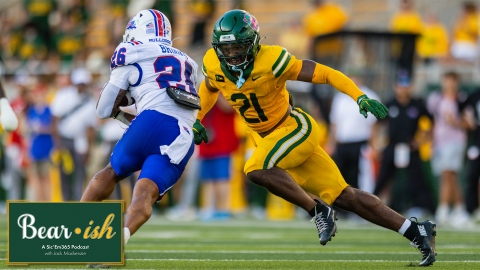
Case in point - in yesterday's football game, it sure would have been nice if someone had been in Dave Aranda's ear and suggested he at least challenge or question the called 'Josh Cameron non-catch' when we were down by 11.
Not that we would have won, but just standing there and not saying anything pretty much sealed the deal in Tucson.
As for the non-foul strategy, you should still go that route EVERY time.
When we're talking about intentionally missing free throws, getting the loose-ball rebound, and making a shot afterwards, the likelihood of all that happening is much less than a player hitting a single 3 to tie a game.
A number of things have to go just right for the former to play out in your opponent's favor.
With the latter, only ONE thing needs to happen.
The question you have to answer as a coach however, is what is the worst case scenario and how best do I avoid that? If you let them shoot and they make a lower percentage shot (a three) the game is tied and you go to overtime. If you foul them you could give up 4 points and lose the game. You believe that you should still foul every time, but in the coaching world I think you are just not going to be in the majority, I will say that in some situations I thought fouling might be best myself, but I have seen too many respected coaches let it play out...no fouls to think fouling is always best.
Respectfully, I don't know what to say about this advisor idea. No matter what anyone does, advised or not, many armchair advisors at home are going to still disagree about what should have been done if what was done didn't work out.
The coaches are the ones that know their roster, the strengths and weakness of the players they have...and their physical condition at the time, and the tendencies of the opposition as they have studied in scouting reports.
Athletic staffs already have available to them many scenarios that have been studied outside of game situations. Likely the most prominent example is when you go for 2 in football after a TD. Sure you could go with your gut, which is not data-based, but most will go back to the "book" that tells them when to go for 2, based on time left in the game, the score, etc. Same thing is probably true of the foul or not foul situation, and dozens of other scenarios. Nothing is going to go strictly by the book, but there are percentages of success tied to each alternative.
People scoff at Aranda's analytics, but I am hearing that term mentioned on all types of sports broadcasts. They are trying to come up with pre-planned actions that have been thought through outside of the frenzy of the game situation...and probably more in-depth than some "advisor" could do on the sidelines or courtside in a game situation that does not allow for outside interjection.
I think it is fine for fans to do the what-ifs or should-haves, but we are the least qualified people to make game-time decisions vs. professionals who have spent years in game situations, hundreds of discussions with other coaches, and multiple coaching clinics. Even if workable and I do not think it is in an in-game situation, how do you decide which coaches need "advisors"? Would you want to tell Mulkey or Auriemma or Staley or Pat in her day, they should confer with an advisor outside their coaching staff to make a decision? All have made what fans think are poor in-game decisions that didn't work. Their advisor is their coaching staff, which they have selected themselves to help them make some of these decisions, expecting that those will provide alternatives to consider if such alternatives exist.